
The Fascinating Evolution and History of Notebooks
 Whether you are a student highlighting textbooks, a professional jotting down meeting notes, or an artist sketching a masterpiece, the notebook is a silent partner in human creativity. But have you ever stopped to wonder about the history of notebooks?
While we often take these bound pages for granted, the journey from ancient clay tablets to the sleek Moleskines of today is a story of innovation, necessity, and the human desire to remember.
When Were Notebooks Invented?
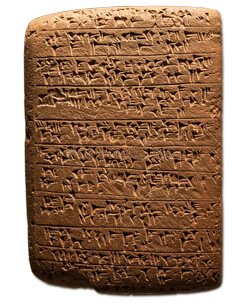
To understand notebook history, we have to look back further than paper. Before the “book” format existed, humans recorded information on stone, clay, and papyrus scrolls.
The Transition from Scrolls to Codex
The true ancestor of the notebook is the codex. Around the 1st century AD, Romans began folding sheets of parchment or papyrus and sewing them together between wooden covers. This was a revolutionary shift from scrolls because it allowed writers to access information quickly without unrolling meters of material.
Who Invented the Notebook? The Modern Milestone
If we are looking for the “Thomas Edison” of the modern pocket notebook, the credit often goes to Thomas Holley in 1888.
Thomas Holley and the Legal Pad
While people had been binding paper for centuries, Holley, a mill worker in Holyoke, Massachusetts, had a brilliant idea to use “smalls”—the leftover scraps of paper from the mill. He bound them together and sold them as pads.
The First Notebook in the World (As We Know It)
While Holley popularized the pad, the first notebook in the world to resemble our modern stationery likely appeared in the 19th-century French stationery shops. These were the “carnets” used by legendary thinkers like Hemingway and Picasso. These weren’t mass-produced office supplies; they were handmade tools for the creative elite.
A Timeline of Notebook History
The evolution of notebooks is marked by several key innovations that made them more portable and durable:
- 1920: The introduction of the spiral-bound notebook. This allowed pages to lie flat or be folded back 360 degrees, a game-changer for students.
- 1980s: The rise of the “Professional Planner.” Brands like Filofax turned notebooks into organizational systems.
- 1997: The “re-birth” of the Moleskine. A small Italian publisher brought back the classic black-bound notebook style used by 19th-century avant-garde artists.
The Digital Leap: Notebooks in the 21st Century
Today, the history of notebooks has entered a digital chapter. We no longer rely solely on wood pulp and ink.
Digital Journals and Smart Notebooks
We now use “smart” notebooks that sync handwritten notes to the cloud via OCR (Optical Character Recognition) technology. Apps like Evernote and Notion have digitized the concept of the notebook, allowing for infinite “pages” and instant searchability.
Why Paper Still Wins
Despite the digital surge, physical notebooks are seeing a massive resurgence. The “analog” feel provides a tactile break from screens, and studies suggest that writing by hand improves memory retention compared to typing.
The Enduring Legacy of the Page
From the first bound parchment in Rome to the sleek, acid-free paper of today, the evolution of notebooks reflects our own intellectual growth. Whether you prefer a leather-bound journal or a digital tablet, the goal remains the same: capturing the fleeting thoughts that shape our world.
The next time you open a fresh page, remember that you are participating in a tradition that spans two millennia.
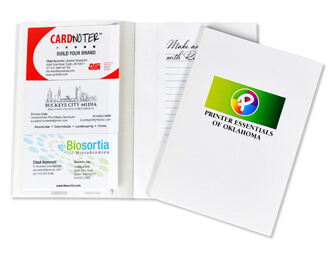
Custom-branded CardNoters have been distributed throughout the U.S. at conferences, conventions, and educational forums; and through local businesses, political, logistics, and educational groups.
CardNoter is available through members of the Promotional Products Industry. Contact your local ASI or PPAI representative for pricing and Free Samples.
For Additional Information call 937.645.4600


 Download Catalog